
Who is the greatest sumo wrestler of all time? Japan’s six-tournament calendar has produced many dominant rikishi, but only a handful combined sustained victory, technical range, and cultural impact on a scale that altered the sport’s history. Below is an introductory snapshot list highlighting the achievements that keep these names foremost in record books and public memory. These are the greatest sumo wrestlers of all time.
Hakuho Reigns Supreme Among Modern Competitors
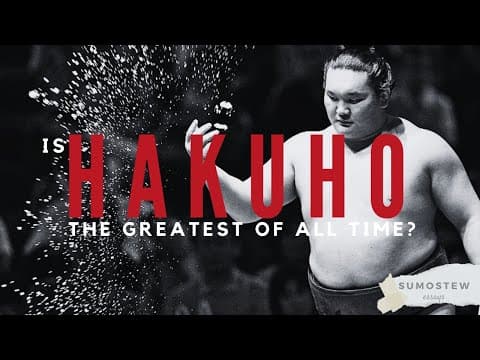
The discussion of sumo’s greatest wrestlers centers on Hakuho Sho, the Mongolian-born champion who retired in 2021 after an unparalleled career. With 45 tournament championships in the top division, Hakuho holds the record for most yusho victories in sumo history. The wrestler achieved the second-longest winning streak in modern sumo with 63 consecutive victories and maintained an 84.6% win rate throughout his career, placing him at the top of modern-era statistics.
Hakuho’s dominance extended beyond championship victories. He holds records for most wins in the top division and most career wins overall, achievements that secured his place as the longest-serving yokozuna in history. His promotion to yokozuna in 2007 at age 22 marked the beginning of a 14-year reign at sumo’s highest rank.
The Great Phoenix Sets the Standard
Before Hakuho’s emergence, Taiho Koki held the championship record with 32 tournament victories between 1960 and 1971. Born Ivan Boryshko on Sakhalin Island to a Ukrainian father and Japanese mother, Taiho became yokozuna at age 21 and dominated sumo’s post-war era. His nickname “Great Phoenix” reflected his graceful yet powerful style, relying more on technique than raw size at approximately 320 pounds.
Taiho’s career featured remarkable consistency, winning at least one championship every year of his top-division career. He achieved six consecutive tournament victories on two separate occasions and recorded 45 straight wins between 1968 and 1969. When Taiho died in 2013, he was widely regarded as the greatest post-war sumo wrestler.
The Wolf Proves Size Isn’t Everything
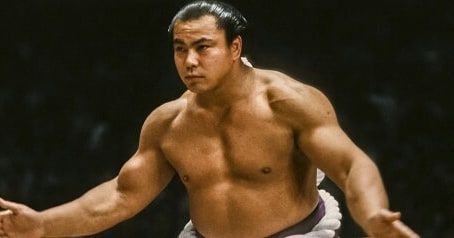
Chiyonofuji Mitsugu earned the nickname “The Wolf” through his muscular physique. At 271 pounds, he proved that technique and strength could overcome size disadvantage in a sport where opponents often weighed over 300 pounds. His 31 tournament championships rank third all-time, and he set multiple records including 53 consecutive victories in 1988.
The Hokkaido native’s career peaked in his thirties, winning 19 of his 31 titles after age 30. He accumulated over 1,000 career victories during his 21-year professional career, earning entry in the Guinness World Records. Chiyonofuji’s combination of power, technique, and longevity established him as one of sumo’s most complete wrestlers.
The Unbreakable Record Holder
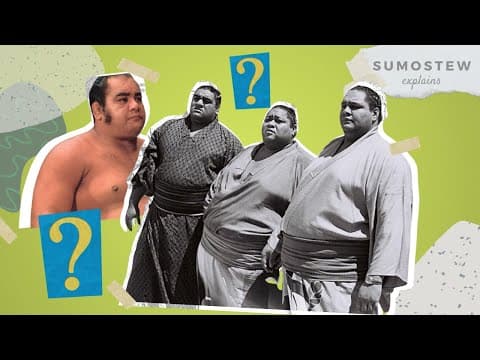
Futabayama Sadaji achieved what many consider sumo’s most untouchable record: 69 consecutive victories from 1936 to 1939. The achievement becomes more remarkable considering Futabayama competed with significant physical handicaps – he was blind in his right eye and missing part of his right little finger from a childhood fishing accident.
The 35th yokozuna entered professional sumo at age 15 and won 12 tournament championships during his career. His winning streak began at sekiwake rank and continued through his promotion to yokozuna, generating such excitement that the Sumo Association extended tournament length from 11 to 15 days. The streak ended when he lost while suffering from dysentery, more due to illness than opponent superiority.
International Pioneers Break Barriers
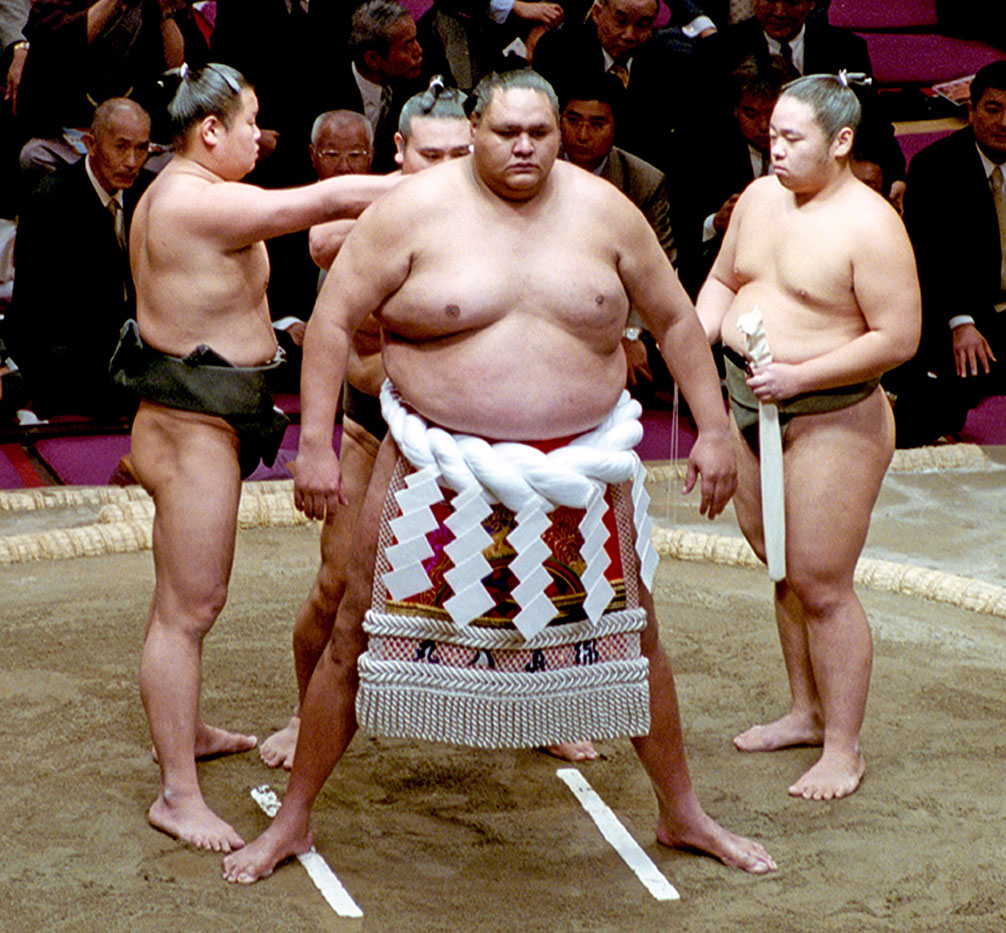
Akebono Taro made history in 1993 as the first foreign-born wrestler to achieve yokozuna rank. The Hawaiian-born Chad Rowan stood 6 feet 8 inches tall and weighed over 500 pounds at his peak. His promotion broke centuries of tradition and opened doors for future foreign champions.
Akebono won 11 tournament championships during his career and became yokozuna after just 30 tournaments, one of the fastest ascents on record. His rivalry with the Hanada brothers – Takanohana and Wakanohana – helped revitalize sumo’s popularity during the 1990s.
The Competitive Mongolian
Asashoryu Akinori became the first Mongolian yokozuna in 2003 and won 25 tournament championships during his controversial career. In 2005, he achieved the rare feat of winning all six official tournaments in a single year. His aggressive style and frequent conflicts with sumo authorities made him a polarizing figure, but his competitive success was undeniable.
The wrestler’s career ended prematurely in 2010 following allegations of assault, cutting short what could have been an even more impressive championship total. Despite the controversies, Asashoryu’s 25 titles place him fourth on the all-time list.
Historical Legends Without Yokozuna Status
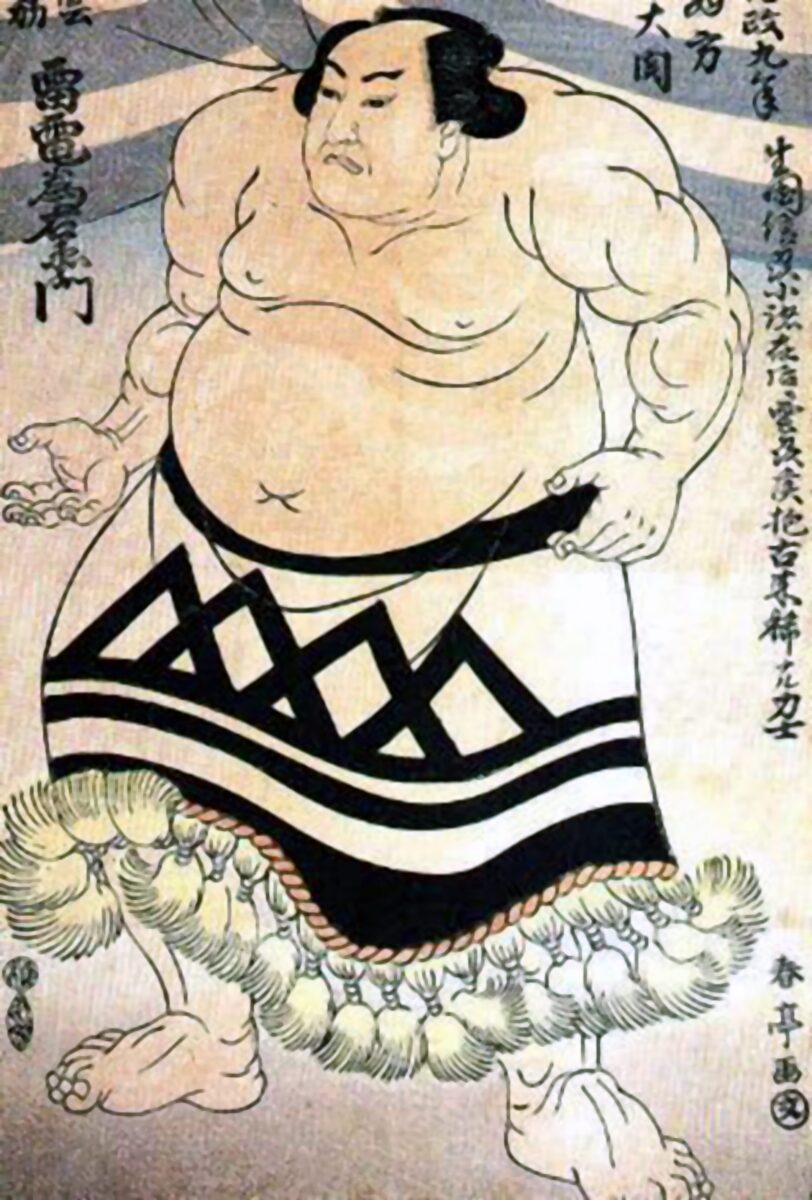
Raiden Tameemon holds the highest winning percentage in sumo history at 96.2%, with a record of 254 wins and only 10 losses. Despite this dominance during the late 18th and early 19th centuries, political reasons prevented his promotion to yokozuna. Standing nearly 6 feet 6 inches tall and weighing 373 pounds by 18th-century standards, Raiden was a physical giant who won 28 unofficial tournament championships.
Modern Era Standouts
Kitanoumi Toshimitsu became the youngest yokozuna in history at age 21 years and 2 months, holding that record until today. The “Hatefully Strong Yokozuna” won 24 championships during the 1970s and remained at yokozuna rank for a record 63 tournaments. Though unpopular with fans due to his dominance and stern demeanor, his consistent excellence established him among sumo’s elite.
Takanohana Koji won 22 championships between 1992 and 2001, ranking sixth all-time. The youngest wrestler to reach the top division at age 17, Takanohana’s rivalry with Akebono drew massive crowds and television audiences during sumo’s 1990s renaissance.
Technical Masters and Style Icons
Wajima Hiroshi remains the only collegiate wrestler to achieve yokozuna rank, earning 14 championship victories and the nickname “Golden Left” for his signature left-handed throws. His unconventional approach included fighting under his real name rather than adopting a traditional ring name, making him unique among yokozuna.
The assessment of sumo’s greatest wrestlers ultimately depends on weighing different achievements across eras. Hakuho’s statistical dominance in the modern era, combined with Taiho’s post-war excellence, Futabayama’s unbreakable streak, and the international barrier-breaking of wrestlers like Akebono, each represents pinnacle achievement in Japan’s ancient sport. These champions transformed sumo through their individual excellence while contributing to the sport’s evolution and global appeal.
Ten All-Time Sumo Greats
Hakuhō Shō – 45 top-division championships, all-time leader in wins and longest yokozuna tenure.
Taihō Kōki – 32 championships, twice completed six straight tournament titles and held the post-war streak record until 2010.
Chiyonofuji Mitsugu – 31 championships, 53-bout winning streak and 1,045 career victories before records fell to later wrestlers.
Futabayama Sadaji – 69 consecutive wins (unbroken record since 1939) and 12 titles during shorter pre-war annual schedule.
Asashōryū Akinori – First Mongolian yokozuna, 25 championships and the lone wrestler to win all six tournaments in one calendar year.
Kitanoumi Toshimitsu – 24 championships, record 63 tournaments at yokozuna and youngest promotion (21) in the pre-Hakuho era.
Takanohana Kōji – 22 championships, cornerstone of 1990s popularity boom and youngest ever makuuchi entrant at 17.
Raiden Tameemon – 96.2% career win rate (254-10), highest documented percentage in top-division history despite never receiving yokozuna rank.
Akebono Tarō – 11 championships, first foreign-born yokozuna and catalyst for the sport’s global appeal in the 1990s.
Wajima Hiroshi – 14 championships, only collegiate yokozuna and fame