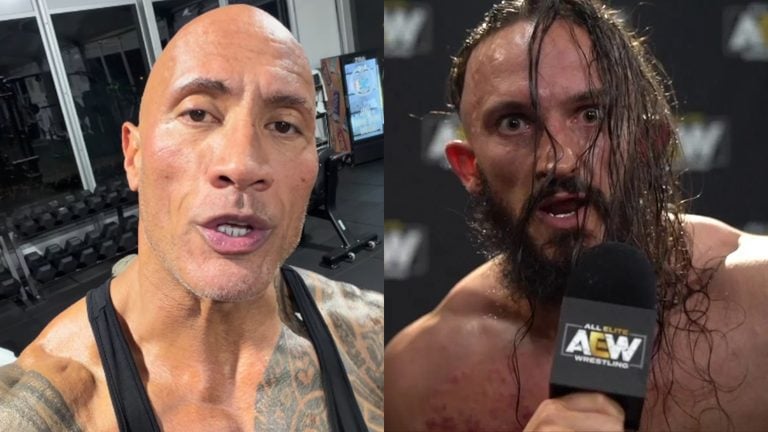
Joe Rogan outlined why Netflix represents a fundamentally different kind of competitive threat to the UFC than anything the promotion has faced before.
During a recent episode of the JRE MMA Show, the longtime UFC commentator hosted Dustin Poirier, and the conversation turned to Netflix’s growing push into live sports. They discussed the platform’s expansion into combat sports, highlighted by major boxing events, and its anticipated move into MMA through a partnership with Jake Paul’s Most Valuable Promotions, slated for May 16.
Rogan emphasized that this is not just another promotion trying to compete on the fringes, but a global platform with the financial muscle to potentially reshape the sport’s entire economic landscape. He also pointed to boxing as the model Netflix could replicate: fans follow fighters, not promoters.
It’s all about the name of the fighters. Just like boxing — nobody cares if it’s Golden Boy or Bob Arum. What they care about is who’s fighting whom. If Netflix can do the boxing thing with big-name stars, they could be a major player, and that will elevate everybody’s pay scale.

The Contract Expiration Window
Joe Rogan’s most pointed observation was not about the upcoming Netflix MMA card itself, which is expected to feature some of the sport’s most recognizable names, such as Ronda Rousey, Gina Carano, Francis Ngannou, and Nate Diaz.
Instead, the renowned podcaster’s focus was on what could follow if the event proves successful. He highlighted the real threat to the UFC’s dominance as the timing of expiring fighter contracts aligning with a well-funded competitor actively looking to sign top talent.
If she’s saying this and Netflix listens, and some shrewd businessman goes, ‘A lot of people’s contracts are coming up — when these people’s contracts come up, let’s get into negotiations,’ all of a sudden some people start drifting over.
He identified UFC welterweight champion Islam Makhachev as a potential domino in that scenario, suggesting that a move from a star of his stature could spark a broader shift among elite contenders.
If you get an Islam Makhachev who starts leaving and goes to fight on Netflix, and they can talk four or five top major contenders into going, look, it’s a big ask. But if that happens…
A Safety Net That Didn’t Exist Before
Meanwhile, Dustin Poirier offered a fighter’s perspective on what a more competitive landscape would mean in practical terms. For most of his career, being cut from the UFC did not just mean losing a job, it often meant the possible end of a fighter’s career altogether.
Ten years ago, they cut you. There’s only one place to make money — they cut you. You’d have to get a job, maybe fight part-time. Now you can pivot and still have a career.
“The Diamond” added that he holds no ill will toward the UFC and sees only positives in the current multi-organization landscape.
I love the UFC. I spent most of my professional career there. But I love seeing these other organizations come up and people making money. It lifts everything. It creates more opportunities for fighters. It’s only a good thing.
Rogan floated an even wilder card at the end of the conversation: YouTube.
Hey guys, we’re YouTube. We’re even bigger than Netflix because YouTube is everywhere.
The UFC’s own Paramount era only began in January, and already the question of who else might enter the MMA broadcasting market is on the table. Francis Ngannou — who left the UFC over pay disputes — has already positioned himself as a symbol of what fighters can earn outside the organization.